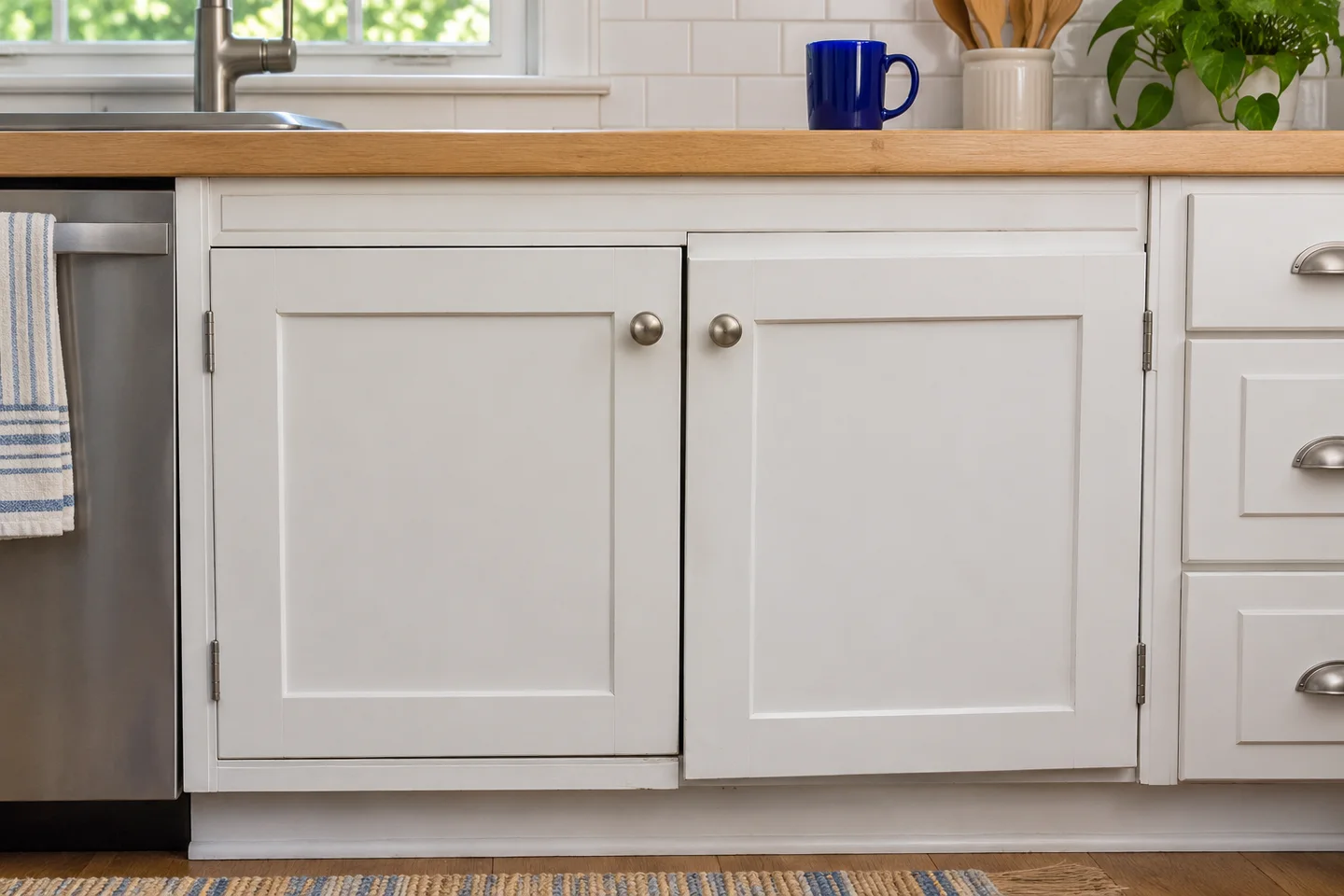
Before / the visible issue
Read the starting conditions in this case study.
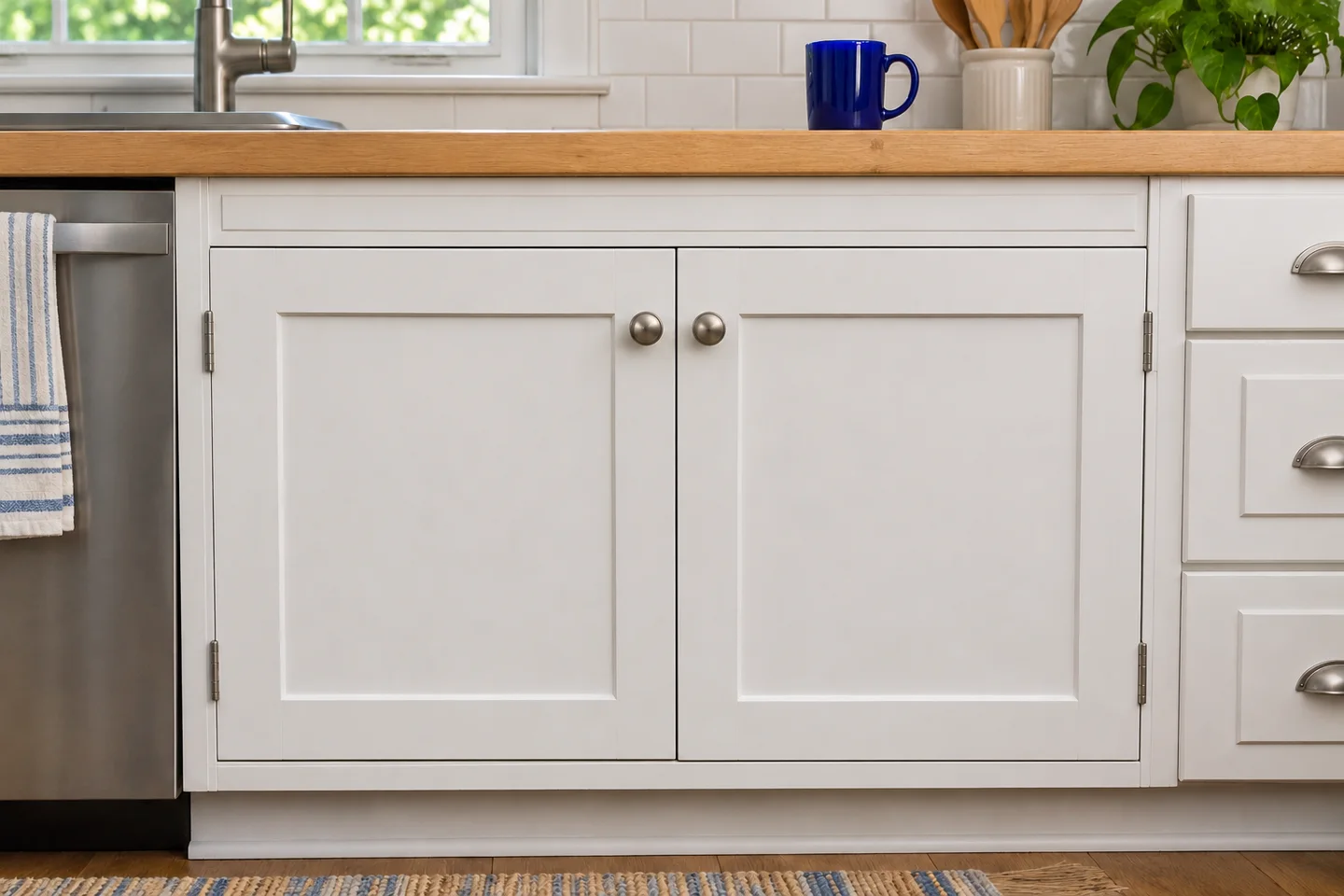
This fictional comparison shows uneven kitchen cabinet doors and a generated example with more even gaps. It demonstrates how a business can describe a small alignment task without presenting an entire kitchen renovation as the result.
 Tell us about your project
An uneven gap can be an alignment issue, a worn fitting or a sign of damaged material. The visible symptom is a useful starting point but does not determine the remedy. This illustrative story separates the request from the checks needed before a cabinet adjustment is agreed. The before-and-after photographs are generated design illustrations, not completed customer work.
These are generated design illustrations, not completed customer work.
Read the starting conditions in this case study.
An example visual finish, not a guarantee for a different property.
The generated before view shows cabinet fronts sitting unevenly beneath a worktop.
The example concerns alignment and existing hardware, not a new kitchen layout or cabinet fabrication.
The generated after view shows an even visual arrangement. Real projects also need checks of ordinary door movement.
Describe the item, symptom and intended finish.
Identify the suitable work and any separate finishing or replacement requirements.
Compare the accepted scope with the work and record any remaining next step.
No. This case study and its photographs are illustrative examples created for the website design.
Use the related service page to describe your own item, condition and expected finish.
No. A photograph does not define hidden conditions, materials or the property-specific scope.
The design is included. Create your private copy first; no payment is taken for the draft. Replace demo photographs and business data before publishing.
Customer payment tools require active hosting, verified seller setup and the applicable payment policies.